AgriFoSe2030 researchers have investigated how enclosures can be used as a land management tool to support food security in the drylands but reveal that the benefits of enclosures differ with perspectives.
Researchers Deborah Muricho and Stephen Mureithi,
two of the Authots behind the article
Pastoralist communities are widespread in the arid- and semiarid regions of Africa. In fact, 70 % of East Africa’s livestock population resides here. Pastoralists rely on livestock for their livelihood. The harsh conditions of the drylands with severe droughts, erratic rainfall and land degradation make it difficult to sustain on conventional agriculture or other activities. As a consequence, food security in the drylands record the lowest indices compared to other areas in Eastern Africa.
A new article from AgriFoSe2030 researchers means that enclosures – areas fenced off from grazing – have the potential to improve food security in the drylands, but a multidisciplinary approach for research as well as applied management is highly needed.
A breathing space for land
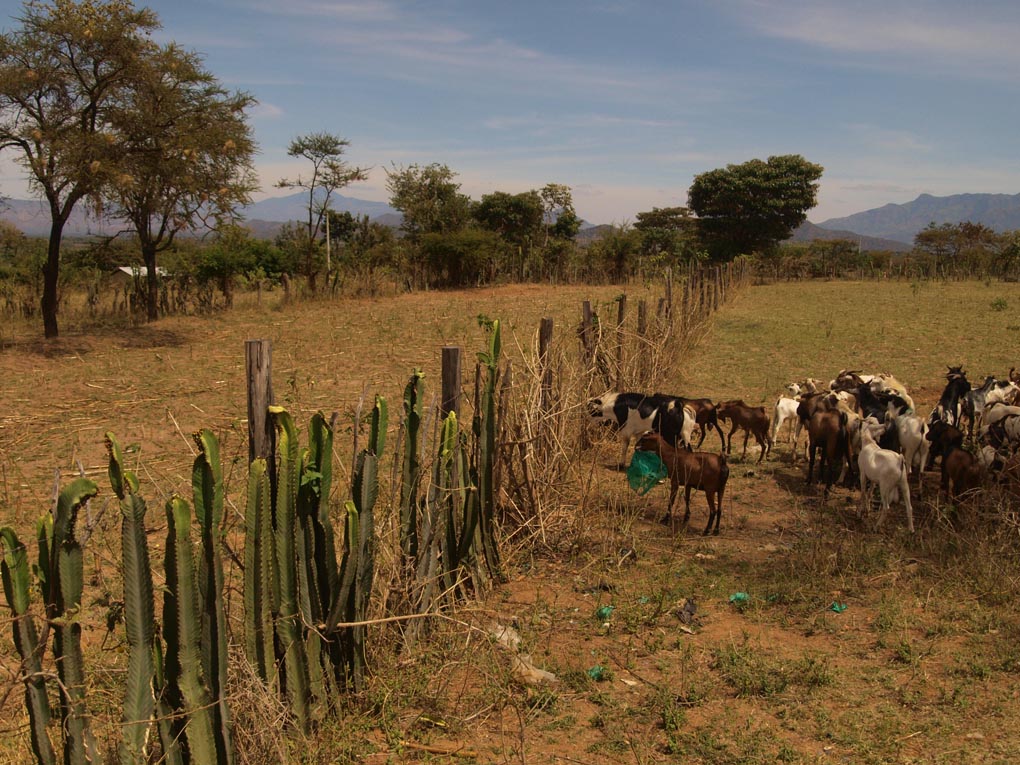
Enclosures have been suggested as tools to improve soil quality and enhance food security due to their provision of a “breathing space” for lands to recover from grazing pressure. The fenced off enclosures are eased from grazing during a period of time to provide for tree growing and land restoration together with feed and fodder production, while at other times open to livestock grazing.
However, the scientific literature reveals that there are two sides of this seemingly beneficial coin. From the natural science perspective, enclosures are great for food security through indirect effects of land restoration. From the social science perspective, the food security can even worsen due to land tenure conflict and elite capture.
- We have seen that households that have enclosures are more resilient to droughts, are losing less of their livestock and even don’t need external support such as relief aid. So, this becomes an important area of policy that should be looked into with a multidisciplinary approach so it can be monitored and evaluated, says Deborah Muricho, one of the researchers behind the article.
The pastoralist communities are facing challenges posed by a combination of environmental and socioeconomic factors such as population increase, climate change and resource conflicts. Hear Deborah Muricho and Stephen Mureithi, researchers at the University of Nairobi, outline how the pastoralists are transitioning from transhuman movement to a more sedentary form, and how enclosures should be supported by policy to ensure a sustainable development.
Key messages of the video above:
Facts:
AgriFoSe2030 - AgriFoSe2030 contributes to sustainable intensification of agriculture for increased food production on existing agricultural land; the aim is to do so by transforming practices toward more efficient use of human, financial and natural resources.
AgriFoSe2030- affiliated researcher Stephen Mureithi presented in the Development Research conference, DevRes18, that took place in Gothenburg on the 22-23 of August. DevRes is a bi-annual international conference gathering hundreds of researchers at the forefront of development. He was part of the panel "Restore more – it’s all about Multifunctional Landscapes" and we’ve asked Stephen a few questions to understand more about restoring multifunctional landscapes.
Dr. Stephen Mureithi during the DevRes18
What is the most difficult barrier we face to restore more and create multifunctional landscapes?
–The most difficult barrier according to me is the change of mindset, be it the farmers’ mindset or the government’s. There is a way people are used to do things, and knowledge passes through generations or government regimes. However, to introduce something different from the regular flow of things is difficult. For instance, to convince the pure pastoralist communities to adopt grass as a crop, and grow it for their livestock requires persistence and patience. I have met many people, including scientists arguing that pastoralists should be left to migrate when grazing resources and water are exhausted in one place. That is OK, if, where they are moving to, has pasture.
– In northern Kenya, most areas now are bare. The herds end up in private property, and the pursuit for resources ends up in armed conflicts, loss of lives, property and livestock. I do not say that everyone should grow grass, but at least some people can invest in fodder value chain so that availability of quality fodder can be smoothened throughout the year, including drought periods. Restoring a degraded community’s grazing lands into productive grasslands is not difficult. As some would say; ‘the ecology always works, the elephant is in the pre-restoration management and governance!’, says Stephen Mureithi.
What are the most efficient way of building resilience in the drylands?
–Building resilience is complex and requires multidisciplinary and transdisciplinary approaches. In my view, agricultural growth and comprehensive food and nutrition security cannot be attained without increasing the capacity of vulnerable people in the drylands to cope with disasters and crises such as drought and floods. There is a need to help countries, counties and institutions to increase this capacity. It can be done around four main areas; vulnerability analysis and resilience measurement; resilience policy and strategy development and implementation; vulnerability reduction at community and household level; and preparedness, coordination and response to crises.
– We need to work a lot with adaptation measures during the more stable periods, to then be able to pacify the effects and impacts of disasters when they strike. Together, we also need to facilitate exchange of efficient resilience practices and promote knowledge-sharing across countries.
How can enclosures work as a land management tool in African drylands?
– We have seen a trend of increasing adoption of enclosures in Eastern Africa where most of the arid and semi-arid areas are degraded. The adoption of enclosures is driven and sustained by a combination of factors such as tenure insecurity, pasture shortage and poor management of pastoral commons. In some counties in Kenya for instance, enclosures were mainly established to demarcate boundaries, provide grazing reserves, enable proper/judicious land management, and facilitate crop cultivation in a pastoral setup and to curb land degradation. Increasingly, they are being established spontaneously by the agro-pastoralist communities for fodder or crop production and livestock management. In this way, they become a key tool for range rehabilitation and improved grazing management which is multifunctional. It increases CO2 sequestration in biomass and soil leading to increased soil organic matter, which in turn have a positive impact on environmental, agricultural and biodiversity aspects of ecosystems.
– The results of an increase in soil carbon storage include increases in soil fertility, land productivity for pasture and food production and security, and prevention of land degradation, thus leading to economic, environmental and social benefits for the local agro-pastoralist communities.
One last question: the DevRes conference is a biennial conference engaging in the debates at the forefront of development studies. What was your experience of the conference in general?
–The overall conference was very well-organized, and it was amazing on what was accomplished within the 2 days. The choice of venue was also great, and the walking from the main conference center to the School of Global Studies gave the participants a good health break with some physical exercise!
Stephen Mureithi is a rangeland
ecologist and soil scientist. His research focuses on the direct effects
of disturbance on dryland ecosystems, their restoration, and its effect
on land, livestock and pastoral livelihoods. He is currently serving as
a researcher and lecturer at the Department of Land Resource Management
and Agricultural Technology (LARMAT), University of Nairobi, Kenya.
Ecology is most interesting for me, when it is aboutecosystem restoration. But there ismoreto itthan the shallow demand for more trees.How does onestart somethinglike this,what do you get and which surprisesdo such projects hold? Dr. Stephen Mureithifrom the University of Nairobi, Kenya, made some time for me.
The problem
Isabella: How did you get the idea to do research about grass?
Stephen: During university I did somefield tripswhere Istarted noticingthat most of thedry landswe were taught aboutwere being degraded. So my question was “How can I help the pastoral communities,which are living in those areas,to cope with drought?”
In places like Turkana, where people are still nomadic (yet in some places they are settled in villages) they reallysufferwhen there is aprotracted dry season. Theiranimals are dying, there isno milk. And that is theirmain livelihood. They do not have anything else. What if they would have a thousand acres with good grass and a well filled barn? They would be able tolink up to the wet season.
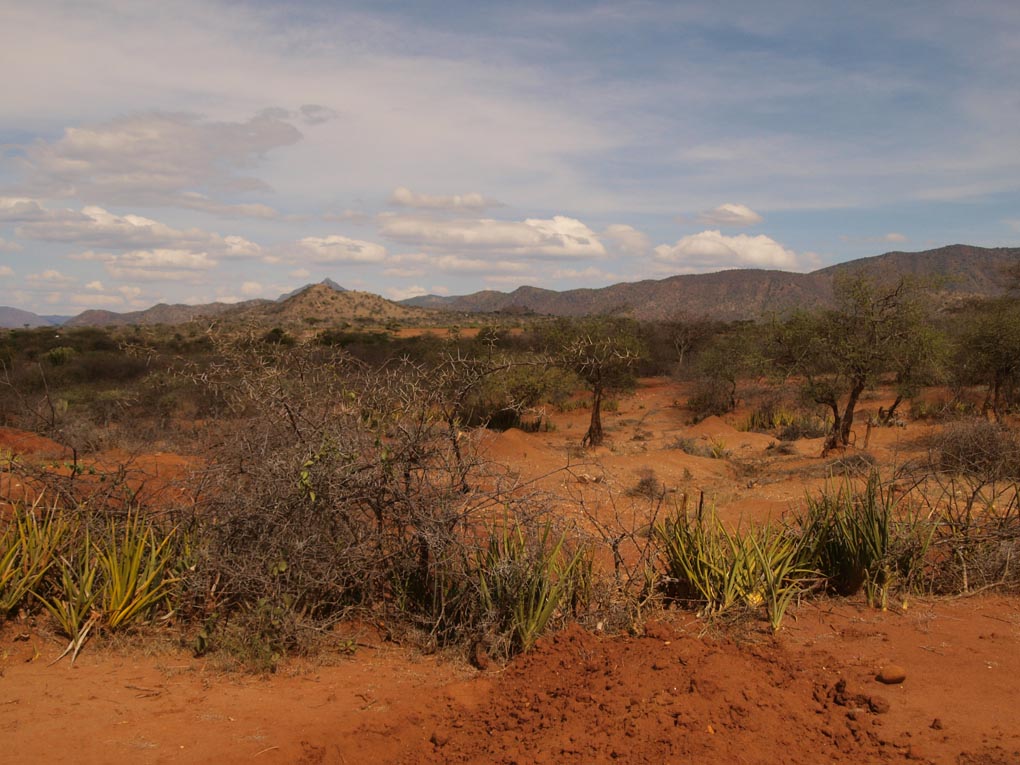
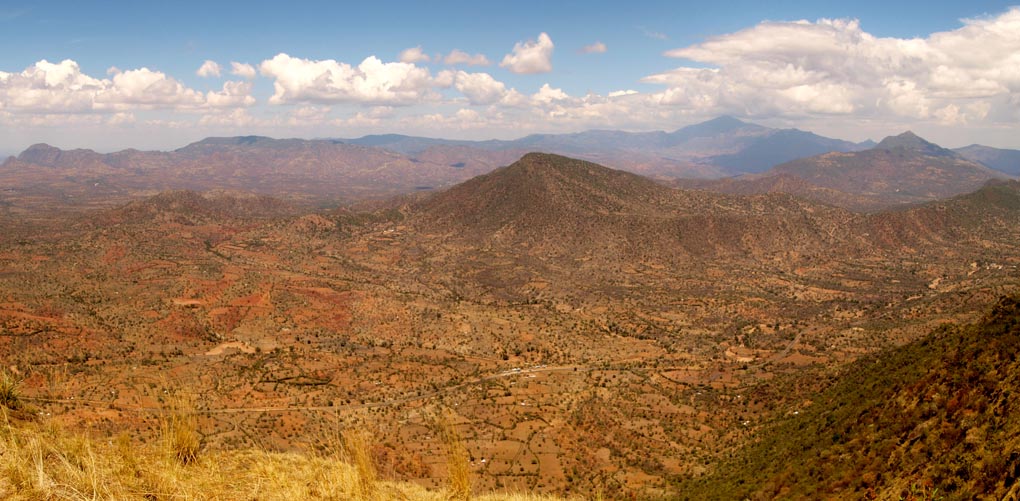
The land during the dry season. During winter at home everything is white, here everything is red.
The cause
I: I have heard it was better before. How come that those range lands have been degraded that much?
S: Some areas had good grass, but because of thepopulation increaseandlarge herds of cattlethetraditional grazing managementstructures haveled to overgrazing. Theelderswhere controllingfew herdsand people were listening to them. But nowadays young people aremore learned, they have guns. They have a mindset of „What is this old man telling us, we can graze anywhere and you’ll do nothing about it.“Of course that leads to problems.
I: So it does not have to do with the colonial government, which has brought a lot of problems in the rift valley?
S: Yes, the colonial governmentdisplaced some communities, butmostly in the highlands, where they wanted to farm or around Laikipia, where they wanted to have ranches. But the dry lands… thepopulationof the pastoralist community wasvery low. If they weredisplaced the effect was small.
If you look atprivate ranchesin Laikipia, they still have agood grass cover.But outside of the fence thecommunity area is completely bare. That means something isnot happening right in the community held land. The mindset of „Oh it’s free for all, I have to take something before someone else takes it“. Thatissue of competitionis bringing thetragedy of the commons.
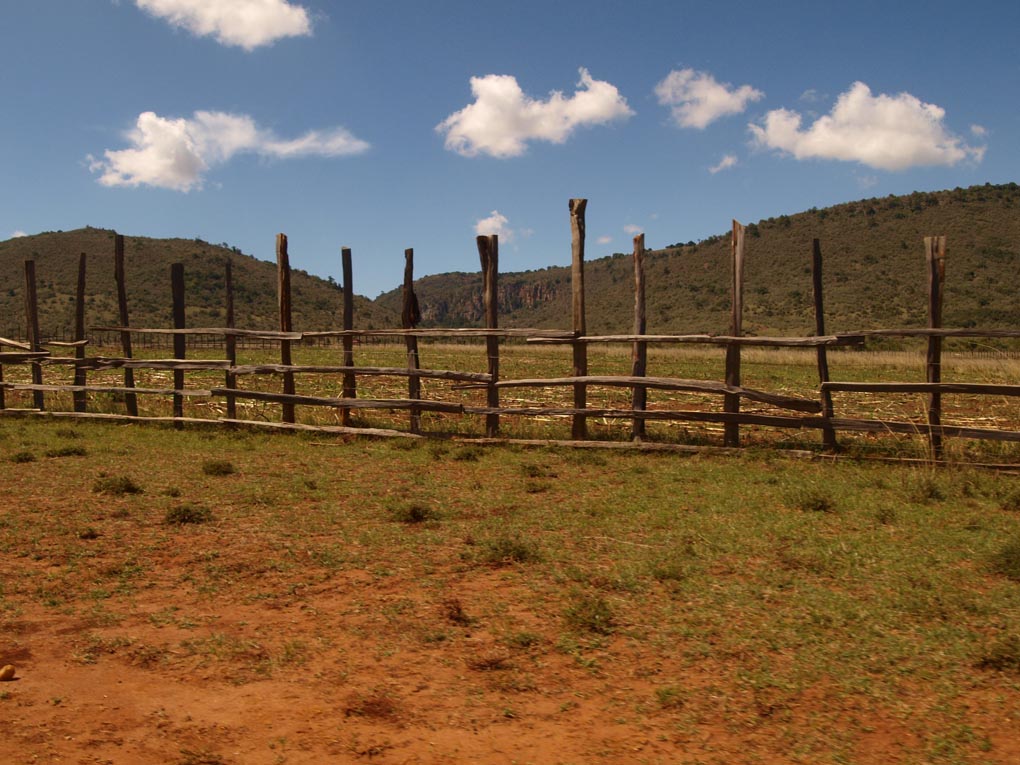
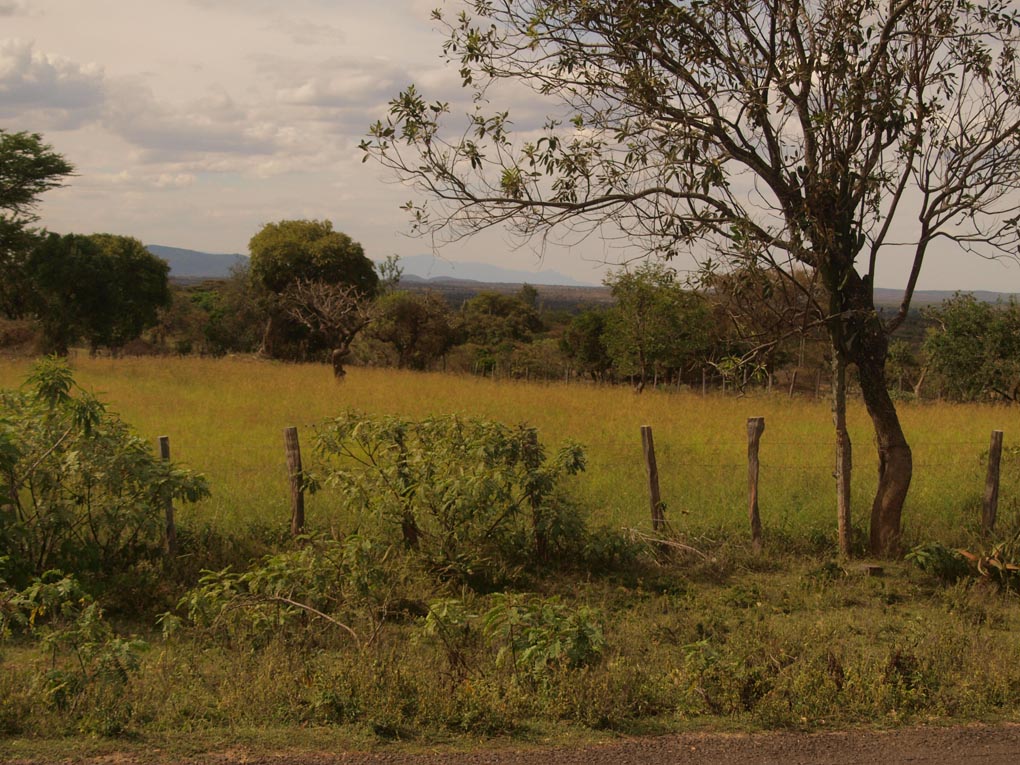
Behind the fences the land is still green.
After the solution
I: Some restoration projects have accidentally set of a wave of land privatization in some areas. What do you think about that?
S: If you look at satellite images of a pastoral communities in Laikipia, you seethe whole place does not have herbaceous cover. And you wonder,are these people better offif they say “We want thisnice communal fieldwhere our livestock hasnothing to graze on.”?
By going this way, we are not saying they have to own individual plots, they canown it as a groupor maybe as a number of households. So it’sstill communal. But I think they arebetter off, if it is restoredand theylearn grass husbandryand thegrass value chainas opposed to when it is only bare soil.
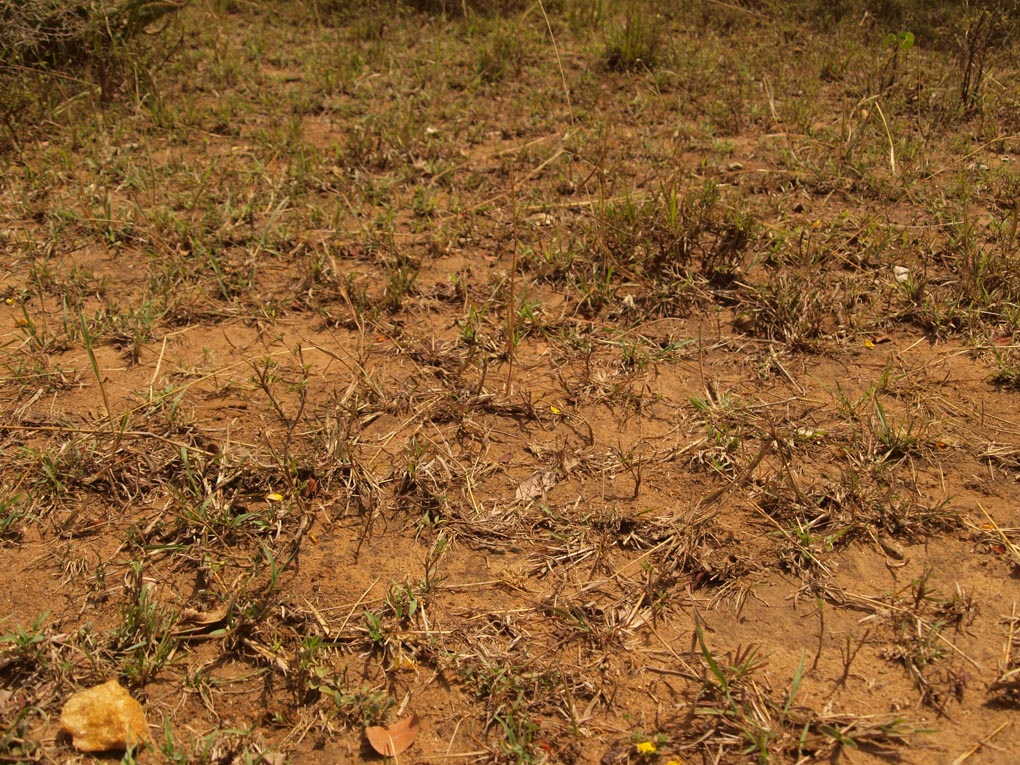
Nothing to graze. And in the coming years it might be even less.
I: In addition to the land restoration process you are teaching communities in capacity building. You are teaching them how to manage the restored land, how to make hay and sell it, you are adding value chains and link communities to markets. Why is it not possible to teach sustainable pastoralism without the capitalist side of selling everything?
S: Your question is good and it’s something that we keep thinking about.Pastoralists are interested in good and modern life like anybody else.
I think we cancheat ourselvesthat there is somebody wholoves to stay in the dry, pastoral area. Without development, without taking their children to school. We can idealize on that. But if youlisten to them closely, they also want an to have incometo be able to do this, to educate their children, to afford stuff.
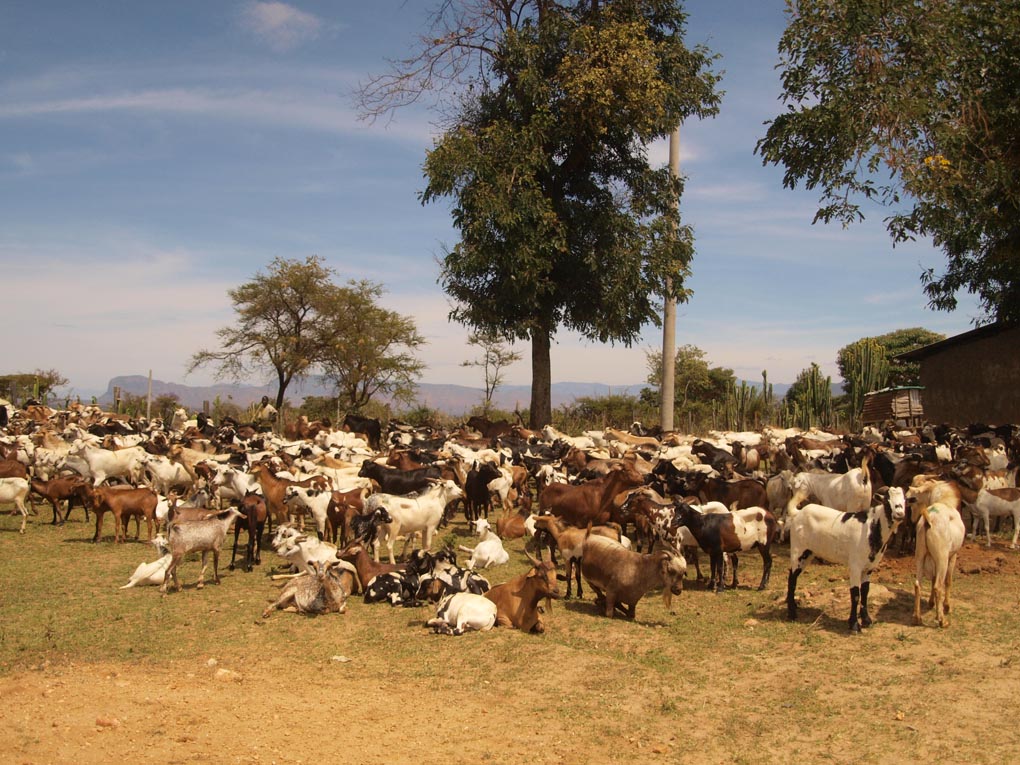
Livestock for the markets.
Money can come second, but it will come, because peopleslives are changing.We cannot have the world changing, going very fast like in Kenya, yet somegroups of people are being left behind too much. So I think we have to talk holistically.
There is a lot ofdemand of meat and milk.If they are able to take a lot of lifestock to the market,it is an opportunity.Because thebest crop for these drylands is grassand then they sell the cow and they can buy what they want. So we cannot seriously avoid to talk about money.
I: This isonly the beginning of this development dynamic.Which means, rightnow a lot of resources are set free, which will be tied up again in the future.What do you think are future problems of these developments?
S: In pastoral areas there are people who are thelead farmers, whoadapt new practices quickly, who are going to be therich people of that area soon. Especially if they are a little bit educated and then they discover that there is wealth to be made.If you have money, there is power that comes with it.Then they cansystematically aquire more land. Some of this land in those areas is not demarcated yet. Those farmers will startfencing it earlyand in the futurepeople will say ‘Ok, that’s where his fence reaches, so that’s his land.”Also there will probably be people who willfall out of the system,because theyadapt slowly.During draughts they crash, their livestock numbers go down and they arenot able to recover.
And in the future with capitalism, growing and selling grass, market linked, there arepeople who are going to be poorer.But maybe there is also a group ofpeople who are going to be very richin the same system. So that is going to be a challenge.
Living fences protect „private“ areas from overgrazing.
Hard stuff…
I: And what were your biggest challenges during the project?
S: One of the mostdifficult things was governance. It iseasyto restore land whichbelongs to a private person. They makedecisions quicklyand know what to do and implement. So if they decide to rehabilitate 5,000 hectares you can quickly do that.
But pastoral communities arenot used to cultivating cropsand now you are telling them „Look, we want you cultivate grass as a crop.“ Sometimes they told us, "Grass belongs to god.“ Then I told them „God grew grass, but you overgrazed everything. So please, we have to work with god to put it back.“
Thatchange of mind is the biggest challengethat we face. Because itwill take 30 yearsto completely have a generation that is thinking „Grass is money, we have to grow it.“ It is a slow walk and a long journey. So itcannot be within a normal project time frame of three years.Engage three years, plant some grass, then disengage. Of coursethat land will go bad again.
I: So another big challenge was your time frame?
S: Yes, the time frame is always a challenge. But what we are doing now ispartnering. I was working on a project in Northern Kenya. It wasfunded only for one year.
Webrought together all the playerswithin the county. We sat down and said„Where my project ends, can somebody else, who has funding, start there?“Now theoriginal project ended, but we gotanother projectfunded through other organizationsin the same area.
… and simple things
I: What was the easy part of your research?
S: There isnothing easy.The easiest part is toput grass seed down and wait for the rainand see it germinate. That meansyou have the moneyand thecollaborationin the field. Theland is preparedwell already, maybe putting a temporary exclosure in place, which means wecut thorn bushesand dugwater harvesting structures.
Eventually they are amazed to see something that was just bare becoming green. That is easiest. And then one of the most challenging things is tomaintain that.Sustainability. And that’s when you come about withgrazing systems.After the restoration,you start building the capacityof the people tomanage the restored area. You teach them that you can get other benefits from grass, including grass seed that you can sell, 1000ksh(10€)per kilo. Then you can harvest the hay and then they can fatten their livestock.
How to do it
I: How did you finally manage to put the grass back?
S: I asked myself„What grass existed here before?“Then we had asitting with the herders,tofind out what speciesexisted. Sometimes I asked them toscout for me and bring evidence,for the grass species they claimed existed. Then they showed me grass species that used to be there but had disappeared. We knew some of them from other areas.
The problem is some of thempropagate through rizhomes or stolons.Those are moredifficult to rehabilitate, because theydo not have seeds.But it still helped, because it showed the local species vis a vis the ones we can bring easily byusing seeds from somewhere else. We have identifiedfive grass species,among them Entropogon macrostachus and Cenchrus ciliaris, that we can usefor rangeland rehabilitation.
Grass for the dry season or selling.
I: What ecological changes did you see after the project?
S: Surprisinglythree grass species came back.Probably because the seeds werestill in the soil seed bank.Because of degradation and over grazing theconditions were notgood for their germination. If they germinated at all they werequickly taken out by the livestock. We have done some studies in other places and we saw that there ismore biodiversity in the restored areas.
I: If you could do your project again, what would you do differently?
S: Excepteverything? I would domore scouting.For example, recently was in northern Kenya at a river bank where I found an ecotype of Sencreas egalis. I could try topropagate itand use it torehabilitate the river bank there, locally,instead of bringing another ecopype from south-eastern Kenya.
So I would try to go that way, find seeds of ecotypes,multiply them locally and use them locally.That way weavoid genetically homogenizing the range lands.
If you have anecotype for the mountains, one for themidrangeand one for thelowlandsyoukeep genetic heterogeneity. Becausedifferent ecotypes might respond differently to draught.
Surprise! That is already the restored area. Looks dry to us, but some ecosystems just are like this.
At the end
I: What was one thing during your project that surprised you?
S: A good surprise is thelook on the face of a farmerwhen he or shegets the first moneyfrom grass.
They said „Now we havemoney from grass?! I can’t believe it.Earlierwe had to sell a cow, now this is money from grass.“ It is amazing to see this.
And to deal with the people,to see that change in the mind of people. A chairman of a fodder group said „We are going to do this over and over again!“. And I think they are going to be rich. So I told them„You see, you only need to protect where the grass is growing and weed it a little bit.“.
He is part of theme 2 in AgriFoSe; Multifunctional landscapes for increased food security and visited University of Gothenburg, Linköping University and Swedish University of Agricultural Sciences for workshops and writeshops. AgriFoSe decided to take the opportunity to ask him a few questions before his arrival.
Stephen Mureithi looking over a Kenyan agricultural landscape. (Courtesy of Stephen Mureithi)
Q: What is your area of research and what are you investigating at the moment?
SM: My research area focuses on the direct effects of disturbance in dryland ecosystems.
My main interests are:
Sustainable land, soil and water management,
Rehabilitation of degraded drylands
Desertification, a phenomenon often equated to a reduction in the biological and economic potential of land to support human populations, livestock and wildlife and which, ultimately, is linked to global climate change, biodiversity loss, pastoral livelihoods patterns, and land use change.
At present, I am carrying out an IGAD funded project as a Co-PI on “enhancing the resilience of livestock-based production systems in northern Kenya’’ in a consortium of researchers from the University of Nairobi, African Dryland Institute for Sustainability (ADIS), Kenya Agricultural and Livestock Research Organisation (KALRO), an NGO called PACIDA, and the County Governments of Isiolo and Marsabit in northern Kenya.
Q: What will you be doing in the AgriFoSe programme?
SM: I am part of theme 2 in AgriFoSe; Multifunctional landscapes for increased food security, led by Madelene Ostwald. We are conducting science-based syntheses and analyzes aimed at understanding the role of multifunctional landscapes (Parklands in Burkina Faso, enclosures in Kenya and home-gardens in Sri Lanka) in promoting food security. In so doing, we will address the gaps in science and policy with the goal to make these landscapes sustainable and resilient.
Q: What do you hope to achieve in the coming years with your research?
SM: Almost all of my research is now action-research, mainly in the rehabilitation of degraded grazing lands as a way of enhancing land productivity and livelihoods. The hardest nut to crack in this equation is the management of the restored lands, which is a governance issue. In the coming years, I look forward to demonstrating clearly that a household can live only on grass-livestock value chain as a main source of their livelihood. I also look forward to fostering greater partnership for action-research, innovation and technology development and transfer among the University of Nairobi, the dryland communities, County Governments and other stakeholders including NGOs and private business practitioners.
Q: Do you have a research team, who are they?
SM: I have no reserch team, but try to always reach out to others. Of course, I also work together with my students. I believe in networking and creating strong collaborations. I am currently in a number of research consortiums and collaborations. These include:
Land, Livestock & Livelihood (Triple L Initiative) Dynamics in East African Drylands - started in 2012 in collaboration with SLU, Lund University, JKUAT, University of Nairobi, ILRI and ICRAF, with planning grants from ILRI, SLU and GCGD.
Research Scientist in the Government of Kenya’s Systems for Land Based Emissions Estimations for Kenya (SLEEK) funded by the Clinton Foundation with funds from Australian Government.
Application and development of isotope techniques to evaluate human impacts on water balance and nutrient dynamics of large river basins. A Research Co-ordinated Project supported by IAEA.
Q: Why are you passionate about your research, why is it so important?
SM: Imagine you are a pastoralist, majorly depending on livestock as a source of livelihood. Then you wake up one day and the grass is gone, literally! This is how I feel and imagine when I visit most of our dryland counties, especially those in northern Kenya. Either there is no grass or the vital herbaceous cover is missing.
Land degradation negatively influences vegetation structure and density. Consequently, it impacts on carbon assimilation, storage and transport in ecosystems, and cycling of water and nutrients. Range rehabilitation and improved grazing management is an example of ‘a multi-use ecosystem carbon sequestration’, addressing loss of ecosystem function and productivity, and would bear a two-fold benefit:
Increased CO2 sequestration in biomass and soil leading to increased soil organic matter contents, which in turn will have a positive impact on environmental, agricultural and biodiversity aspects of ecosystems through the subsequent improved land-use and management practices;
The benefits of an increase in soil carbon storage can include increases in soil fertility, land productivity for pasture and food production and security, and prevention of land degradation, thus leading to economic, environmental and social benefits for the local agro-pastoralist communities.
Degraded landscapes are common phenomena in Sub-Saharan Africa, but there are proven methods for turning them into productive grasslands, Mureithi points out. (Courtesy of Stephen Mureithi)
Q: What are you hoping to achieve with your visit to Sweden?
SM: I hope to strengthen the collaboration between the University of Nairobi and the Universities in Sweden, and also the networking among the Triple L researchers.
Q: What are your expectations of the programme? What do you think makes the programme important, and why and to whom does it matter?
SM: I expect that AgriFose will generate knowledge and information that will feed into policy processes in the programme areas, in a way that will make the lives of the communities more food secure, and more resilient and adapted against global environmental changes. It is also my expectation that the knowledge generated will be shared across the study sites, in a way that the lessons, innovations and technologies and best practices can be replicated by the communities. My ultimate goal as a researcher is to contribute in making the lives of people better.
Q: How did you come to be a researcher? Was it a childhood dream? Did you want to solve something?
SM: I knew I wanted to be a plant scientist in high school. I loved biology and chemistry. I ended up in ecology. There is nothing as intriguing as watching a plant grow – you do not see it, but you see the result!
Q: What do you like to do when you are not working?
SM: I enjoy nature travelling with my family, mentoring the youth and agripreneuring – I market healthier coffee, tea and chocolate with the King of Herbs (Ganoderma lucidium) Check it out!
Q: Is this your first visit to Sweden?
SM: Yes, and I am excited about it. I have been to many European Countries in the West, but this is a first to a Scandinavian Country.
Contact information
If you want to find out more about Stephen Mureithi’s visit to Sweden, please email Madeleine Oswald: madelene.ostwald@chalmers.se
If you want to know more about Stephen Mureithi’s research contact him at: stemureithi@uonbi.ac.ke
Combating land degradation in the semi-arid rangeland of sub-Saharan Africa is essential to ensure long-term productivity of these environments. In the Lake Baringo Basin in Kenya, communities and individual farmers restored indigenous vegetation inside enclosures in an effort to combat severe land degradation and address their livelihood problems. This study quantified the benefits of rangeland rehabilitation using yearly communal enclosures’ utilisation data compiled by Rehabilitation of Arid Environments (RAE) Trust over a 6 year period (2005–2010). Results showed that communal enclosures provide a source of income through the sale of fattened livestock, harvested grass seeds, hay, honey and charcoal, among other products. Regression analysis showed an increasing total enclosure income with time. The enclosures also provide grasses for thatching, livestock feed and dry season grazing. Indirect products like milk, blood and meat are essential for household nutrition and food security. These benefits reinforce the management through incentive to maintain existing enclosures and establishing new ones, and therefore, the increasing trend in rangeland enclosure. Increased soil and biomass carbon storage could come with other indirect environmental benefits including improvement in soil quality, land productivity for pasture production and food security, and prevention of land degradation, thus leading to economic, environmental and social benefit for the local agro-pastoralist communities. Copyright: John Wiley & Sons, 2014.
Interests:
• Ecological restoration especially in drylands, multi-use ecosystem carbon sequestration approaches for combating land degradation and biodiversity loss, climate change and poverty; adaptation and pastoral livelihoods; land quality monitoring.
• Land-use planning, watershed management, water harvesting, soil and water conservation.
• Real estate, ranching, eco-tourism, conservation-based enterprises.




 Posts


