Showing posts with label Ecological restoration. Show all posts

Monday, December 7, 2020

0 Restoring rangelands for nutrition and health for humans and livestock - New Research Project


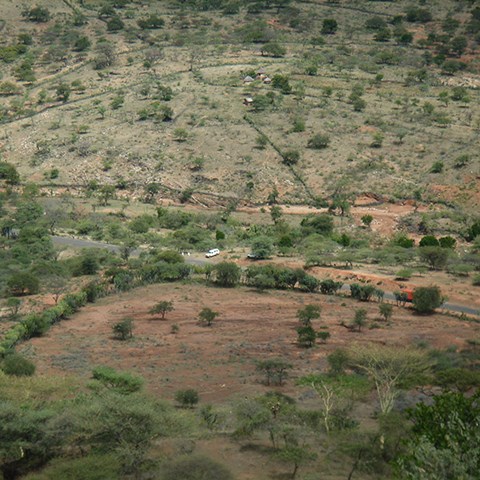
Drylands Transform is the new interdisciplinary research project starting up in the border region between Uganda and Kenya. The research team –coordinated by SLU – wants to modify the ongoing negative spiral of land, livestock and livelihood degradation into a positive transformation. The project aims to contribute to several of the United Nations global sustainable development goals.

Drylands cover 40% of the global land area and hosts 2 billion people of which 90% live in low- or middle-income countries. Drylands often face severe land degradation, low agricultural productivity, rapid population growth, widespread poverty and poor health. Livestock-based livelihoods, largely depending on seasonal migration are the norm.

Vulnerable to climate change

People and land are highly vulnerable to climate change, while there are also changes in land tenure, insecurity/conflicts and rapid infrastructure growth. Governance structures and institutions are often eroded.

In Drylands Transform we will investigate the links between land health, livestock-based livelihoods, human well-being, and land management and governance. We will contribute with new knowledge for transformative change and sustainable development of rangelands in the drylands of East Africa.

Stakeholder engagement

Through strong stakeholder engagement in interdisciplinary research, we set out to explore the challenges and pathways towards a social-ecological transformation in drylands that optimizes synergies among the sustainable development goals (SDGs) while minimizing the trade-offs. We will use innovative field research approaches focusing on livelihood improvement through rangeland restoration and governance interventions in some counties in the border region between Kenya and Uganda.

Sustainable development goals

The entry point of Drylands Transform is the urgent need to identify and enhance synergies between food and nutrition security (sustainable development goal, SDG, 2), land and ecosystem health (SDG15) and peaceful and inclusive societies (SDG16) for sustainable dryland development, while minimizing trade-offs between agricultural productivity (SDG2), natural resources management (SDG15) and climate change (SDG13). Interactions between the above SDGs and good health and well-being (SDG 3), gender equality (SDG 5) and access to clean water and sanitation (SDG6) will also be analysed.

For more information, please contact 

Professor Ingrid Öborn
Department of Crop Production Ecology, SLU 
ingrid.oborn@slu.se

Ylva Nyberg
Department of Soil and Environment, SLU 
ylva.nyberg@slu.se

More SLU researchers in the project

Aida Bargués Tobella, Department of Forest Ecology and Management
Ewa Wredle, Department of Animal Nutrition and Management
Gert Nyberg, Department of Forest Ecology and Management
Göran Bostedt, Department of Forest Economics

Researchers from other universities/organisations in the project 

Per Knutsson - School of Global Studies, Gothenburg University
Barbara Schumann - Department of Epidemiology and Global Health, Umeå University
Agneta Hörnell - Department of Food, Nutrition and Culinary Science, Umeå University
Kristina Lindvall – Department of Epidemiology and Global Health, Umeå University
Stephen Mureithi - Department of Land Resource Management and Agricultural Technology (LARMAT), University of Nairobi, Kenya
Denis Mpairwe – Department of Agricultural Production, Makerere University, Kampala, Uganda
Alice Turinawe - Department of Agribusiness and Natural Resource Economics, Makerere University, Kampala, Uganda
Dereje Wakjira – Resilience and Pastoralism, Intergovernmental Authority on Development (IGAD), Nairobi, Kenya
Leigh Winowiecki – Land Health Decisions, World Agroforestry (ICRAF), Nairobi, Kenya
Tor-Gunnar Vågen – GeoScience lab, World Agroforestry (ICRAF), Nairobi, Kenya

Drylands Transform 2020-2024

In Drylands Transform we will:

  • Assess land health at the landscape scale and explore the links with human health and well-being
  • Co-develop sustainable rangeland management options with local communities, and set-up knowledge sharing hubs (‘livestock cafés’)
  • Study impacts of seasonality and climate variability on food and livelihood strategies, well-being and resilience.
  • Identify innovative land governance mechanisms and practices that effectively address livestock-keepers’ dependence on both flexible and secure rights to land.
  • Co-design and evaluate alternative scenarios for sustainable dryland transformation in East Africa with local and regional stakeholder groups.

The Swedish University of Agricultural Sciences (SLU) is leading the multidisciplinary team with researchers from Umeå University, Gothenburg University, University of Nairobi, Makerere University, World Agroforestry (ICRAF) and the Intergovernmental Authority on Development (IGAD).

This research project is funded by the Swedish Research Council, Formas, 2020-2024.

PUBLISHED: 02 DECEMBER 2020

Sunday, September 15, 2019

0 Enclosures – a positive land management tool for food security or a driver of tenure conflicts?

AgriFoSe2030 researchers have investigated how enclosures can be used as a land management tool to support food security in the drylands but reveal that the benefits of enclosures differ with perspectives. 
Researchers Deborah Muricho and Stephen Mureithi,
two of the Authots behind the article
Pastoralist communities are widespread in the arid- and semiarid regions of Africa. In fact, 70 % of East Africa’s livestock population resides here. Pastoralists rely on livestock for their livelihood. The harsh conditions of the drylands with severe droughts, erratic rainfall and land degradation make it difficult to sustain on conventional agriculture or other activities. As a consequence, food security in the drylands record the lowest indices compared to other areas in Eastern Africa.
A new article from AgriFoSe2030 researchers means that enclosures – areas fenced off from grazing – have the potential to improve food security in the drylands, but a multidisciplinary approach for research as well as applied management is highly needed.

A breathing space for land

Enclosures have been suggested as tools to improve soil quality and enhance food security due to their provision of a “breathing space” for lands to recover from grazing pressure. The fenced off enclosures are eased from grazing during a period of time to provide for tree growing and land restoration together with feed and fodder production, while at other times open to livestock grazing.
However, the scientific literature reveals that there are two sides of this seemingly beneficial coin. From the natural science perspective, enclosures are great for food security through indirect effects of land restoration. From the social science perspective, the food security can even worsen due to land tenure conflict and elite capture.
- We have seen that households that have enclosures are more resilient to droughts, are losing less of their livestock and even don’t need external support such as relief aid. So, this becomes an important area of policy that should be looked into with a multidisciplinary approach so it can be monitored and evaluated, says Deborah Muricho, one of the researchers behind the article.
The pastoralist communities are facing challenges posed by a combination of environmental and socioeconomic factors such as population increase, climate change and resource conflicts. Hear Deborah Muricho and Stephen Mureithi, researchers at the University of Nairobi, outline how the pastoralists are transitioning from transhuman movement to a more sedentary form, and how enclosures should be supported by policy to ensure a sustainable development.


Key messages of the video above:
Facts:
AgriFoSe2030 - AgriFoSe2030 contributes to sustainable intensification of agriculture for increased food production on existing agricultural land; the aim is to do so by transforming practices toward more efficient use of human, financial and natural resources.

Saturday, September 8, 2012

0 Restoring The Ecology Can Boost The Economy


Research co-authored by Bournemouth University (BU) Professor Adrian Newton and published in the journal Science shows that ecological restoration in areas of environmental degradation can help reverse global biodiversity losses, as well as promoting recovery of ecosystem services.

However the research also showed that measures of biodiversity and ecosystem services are higher in pristine land, freshwater and marine systems than in restored systems.

Examples of ecosystem services include improved water quality and increased carbon storage, services which benefit human well-being.

The research was carried out by an international team from the University of Alcalá in Spain, the UK’s Centre for Ecology & Hydrology, and Bournemouth University in the UK.

Professor Newton, an environmental conservation expert from BU’s Centre for Conservation Ecology and Environmental Change said: "These results highlight the importance of ecological restoration approaches for addressing the environmental degradation that has occurred in many parts of the world. The research suggests that restoration can offer a 'win-win' solution, by increasing the provision of environmental benefits to people, while at the same time increasing biodiversity."

Lead author, Professor José M. Rey Benayas from the University of Alcalá and President of the International Foundation for Ecosystem Restoration said: "In addition to the improved biodiversity resulting from ecological restoration, our findings show that such restoration also has benefits for ecosystem services. These services can act as an engine of economy and a source of green employment, so our results give policymakers an extra incentive to restore degraded ecosystems.”

Ecological restoration is widely used to reverse the environmental degradation caused by human activities. However, the effectiveness of restoration actions in increasing provision of both biodiversity and ecosystem services has not previously been evaluated systematically.

The research team analysed results from 89 restoration assessments carried out in a wide range of ecosystem types across the globe. On average, ecological restoration increased provision of biodiversity and ecosystem services by 44% and 25% respectively. Increases in biodiversity and ecosystem service measures following restoration were positively correlated. However, values of both remained lower in restored than in intact (undamaged) reference ecosystems.

The results indicate that restoration actions focused on enhancing biodiversity should support increased provision of ecosystem services, particularly in tropical terrestrial areas, which hold the largest amounts of biodiversity and are usually subject to high levels of human pressure."

Co-author, Professor James Bullock from the Centre for Ecology & Hydrology said: "We have shown that across the globe restoration projects are able to help reverse loss of the biodiversity and ecosystem services in areas degraded by human activities. While restoration can help reverse losses, this research shows it is critical for human well-being that we conserve pristine habitats and the biodiversity and ecosystem services they provide."

Source: Bournemouth University (2009, August 31). Restoring The Ecology Can Boost The Economy. ScienceDaily. Retrieved September 8, 2012, from http://www.sciencedaily.com­/releases/2009/08/090828150735.htm

Journal Reference: Benayas et al. Enhancement of Biodiversity and Ecosystem Services by Ecological Restoration: A Meta-Analysis. Science, 2009; 325 (5944): 1121 DOI:10.1126/science.1172460
 

Functional Ecosystems Copyright © 2011 - |- Template created by O Pregador - |- Powered by Blogger Templates